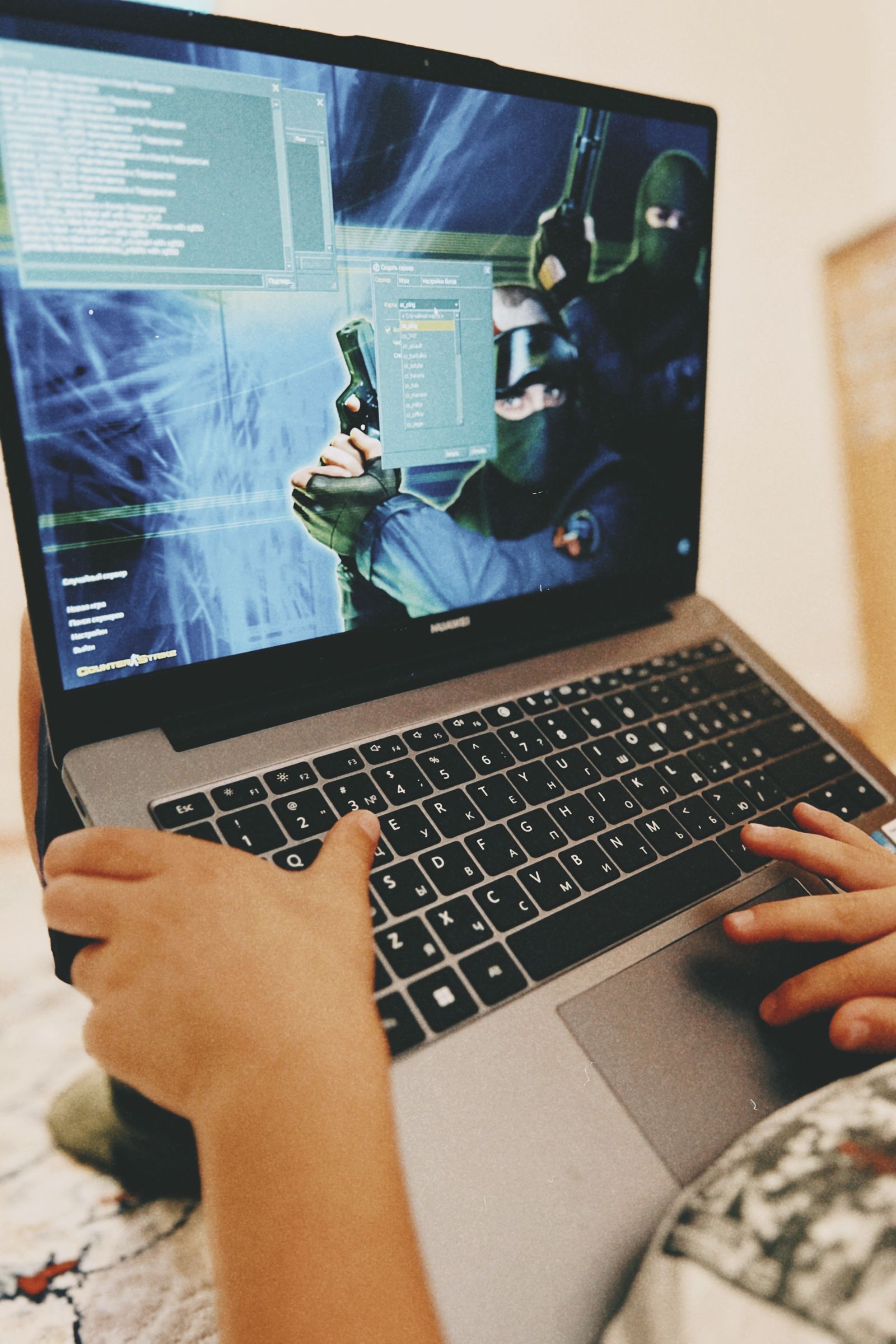
There is a moment in almost every game when the world becomes legible.
The map opens. The objective appears. A tiny sound tells you that something worked. Even failure has a shape: you know what happened, what you can try next and where the restart button might be.
Real life is rarely that considerate.
There is no clean quest log for a difficult friendship, no progress bar for becoming less afraid, and no guaranteed checkpoint after a year that rearranged everything. Still, people keep turning existence into game-shaped language. We talk about levels, side quests, plot twists, character development, winning, losing and starting over.
That does not prove that life is a game. It suggests something more interesting: play may be one of the ways human beings make an unknowable world feel possible to move through.

Elon Musk asked the cosmic version of the question
At a 2016 Code Conference conversation, Elon Musk argued that if video games continue becoming more realistic, the odds that we are in “base reality” could become extremely small. His reasoning was an extrapolation: a sufficiently advanced civilisation might create vast numbers of convincing simulations, making an original reality statistically unusual.
That is the famous simulation argument. It is also still an argument, not a measurement.
Musk repeated the idea in later interviews, but no telescope, experiment or software test has established that our universe is a computer program. The original simulation argument by philosopher Nick Bostrom sets out a philosophical trilemma about civilisation, consciousness and simulations; it does not announce that anyone has found the source code of reality.
The useful part of the thought experiment is not the sci-fi certainty. It is the pressure it puts on a familiar assumption: why do we treat “real” and “constructed” as complete opposites? A city is constructed. A language is constructed. A game is constructed. Yet the feelings, consequences and relationships inside those systems can still matter.
What physics can—and cannot—tell us
Physics gives the question a sharper edge, but not a secret answer.
Scientists already use computer simulations to study systems that are too large, too fast, too slow or too dangerous to test directly. Researchers simulate galaxies, fluids, climate, materials and particle interactions. A scientific simulation is a model: it follows chosen equations and assumptions, then produces results that can be compared with observations. It is not automatically a miniature universe with its own conscious inhabitants.
That distinction matters. The fact that we can simulate part of nature does not show that nature itself is simulated. The Stanford Encyclopedia of Philosophy's overview of computer simulations in science describes simulations as instruments used in scientific investigation, while also stressing that models involve approximation and questions about how much their outputs warrant belief.
There is also a physical problem hiding inside the popular video-game picture. A game only renders what it needs for the player's experience. A universe would contain vastly more than a visible screen: quantum fields, stars, heat, gravity, biological bodies and the information required for their interactions. A 2025 astrophysics preprint by Francesco Vazza argues that several versions of a simulated universe would demand energy and information resources incompatible with known physics. That is a serious constraint, not a final disproof; it shows why “the universe is just a game” is not a scientific conclusion.
The honest position is narrower: simulation is a philosophical hypothesis with possible physical implications, but no accepted observation has demonstrated that we live inside one. In science, an idea becomes stronger when it makes risky predictions that can be tested—not merely when it explains why reality feels strange.
The game can be imaginary and still change you
When someone learns a song, joins a football team, makes a costume or spends a night playing co-op, the rules are partly invented. The activity is not fake. It creates attention, coordination and memory.
That is why the word play is bigger than entertainment.
Johan Huizinga’s Homo Ludens treated play as a serious cultural force: something that shapes ceremonies, competition, art, law and social life. Research and teaching around the concept still describe play as foundational to how humans make culture, not merely as a break from it. We do not only play after real life. We use play to rehearse what real life could be.

Stimulation is not the same as meaning
Here is where the game metaphor can go wrong.
Modern platforms are very good at giving us tiny rewards: a new notification, another clip, a streak, a number that moves upward. The sensation is real, but constant stimulation is not automatically a life with direction.
A game that only gives points becomes exhausting. A game with no choice becomes a slot machine. A life organised around endless reaction can feel active while quietly removing the feeling of authorship.
The better question is not, “How can I feel more stimulated?” It is, “What kind of challenge makes me more awake to my own life?”
That difference matters. A difficult conversation can be uncomfortable without being pointless. Cooking for friends can be repetitive without being empty. Walking home a different way can be a tiny experiment. Making something badly, then making it slightly better, gives feedback that a feed cannot provide: the result belongs to your attention.
James P. Carse had a different kind of game in mind
In Finite and Infinite Games, James P. Carse distinguishes between games played to win and play understood as a way of continuing. His official book page summarises the distinction simply: “A finite game is played for the purpose of winning, an infinite game for the purpose of continuing the play.”
That idea gives the metaphor a useful upgrade.
The exam is a finite game. So is a promotion, a race, a ranking and a follower count. These goals can matter. They can also become dangerous when we mistake one scoreboard for the whole world.
An infinite game is closer to learning an instrument, caring for a friendship, staying curious about a place or building a body of work. There are still standards and failures. The point is not that nothing counts. The point is that the activity is not over just because one round ended.
What playing existence could look like
Playing life does not mean pretending pain is fun or treating other people like non-player characters. It means approaching some parts of the day with curiosity instead of demanding that every move prove your worth.
Try four small rules:
- Make the objective visible. Replace “fix my life” with “send one honest message” or “walk for twenty minutes.”
- Choose feedback you can trust. A finished page, a calmer room or a friend who feels heard is more useful than an app score that only asks for another tap.
- Allow cooperative play. The best games are not always solo campaigns. Ask someone to learn, cook, practise or explore with you.
- Keep the human stakes real. A metaphor is helpful until it makes you forget that bodies get tired, people have boundaries and consequences do not disappear when the screen goes dark.
The astonishing thing is not that we might be characters in somebody else’s simulation. We have no reliable evidence for that.
The astonishing thing is that, inside a world we did not design and cannot fully explain, humans keep inventing ways to make meaning together. We build rules, then bend them. We lose, restart, teach one another the controls and sometimes stop playing long enough to notice the sky.
Maybe life is not a game.
But it is clearly something we participate in. And participation is different from merely being entertained.
Sources and context
- Elon Musk at the 2016 Code Conference
- Nick Bostrom, “Are You Living in a Computer Simulation?”
- Stanford Encyclopedia of Philosophy, “Computer Simulations in Science”
- Francesco Vazza, “Astrophysical constraints on the simulation hypothesis”
- Johan Huizinga, Homo Ludens
- James P. Carse, Finite and Infinite Games
Images: Wikimedia Commons. Image credits and licences are listed in the article metadata and source links above.