At some point, scrolling stops feeling like rest.
You put your phone down and realise you have spent an hour looking at other people’s rooms, outfits, opinions, meals and tiny personal updates. You were entertained, technically. But you did not make anything, finish anything or leave the hour with much to hold.
That may be part of why hands-on hobbies are suddenly feeling so attractive.
Not because every young person is abandoning the internet. They are not. The more interesting shift is that some people are looking for activities that produce something physical, personal and slower than the next swipe.
The internet is still where many of these hobbies are discovered. It is just no longer the only place people want to spend their time.
Making something feels different from consuming something
Scrolling is frictionless. There is always another post waiting, and the reward arrives before you have had time to decide whether you actually wanted it.
Making asks more from you.
You have to choose the yarn. Cut the fabric. Mix the clay. Make the crooked first attempt. The result might be useful, beautiful, strange or none of those things, but it exists because you stayed with one activity long enough for it to become real.
That difference is an interpretation, not a universal Gen Z experience. Plenty of people find genuine community and creativity online. But recent reporting has pointed to a growing interest among younger people in crochet, drawing, pottery and other slower hobbies because they offer connection, purpose and a break from digital fatigue. The appeal is less “technology is bad” and more “I want one part of my day to leave something behind.”
The hobbies coming back
Crochet and knitting
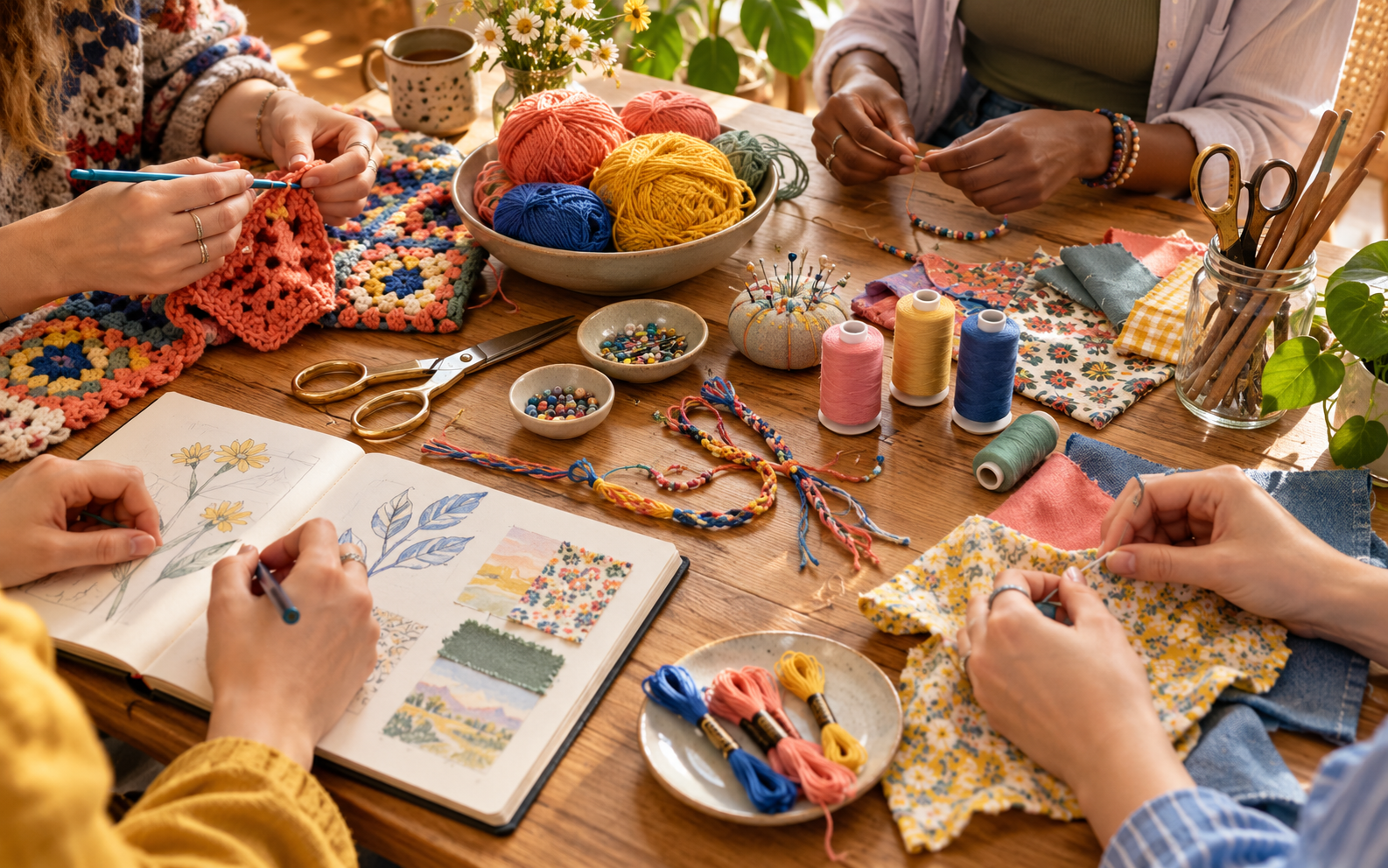
Yarn has become a very visible gateway hobby. Crochet projects are portable, easy to pause and satisfying to film without requiring the maker to look polished on camera.
There is also a natural progression from one small project to another. A beginner might start with a flower or a granny square, then try a bag, a beanie or a wearable piece that carries the evidence of every mistake.
Hobbycraft’s 2025 report recorded a rise in crochet demand in the UK and said Gen Z showed interest in pottery and digital crafting too. That is useful evidence of a market and interest signal, but it is not proof that an entire generation has picked up a hook.
Sewing and upcycling clothes
Sewing makes the relationship with clothing more visible.
Instead of treating a ripped pair of jeans or a tired shirt as an automatic reason to shop, people can patch, alter, embroider or remake it. The finished item does not need to look factory-perfect. A visible repair can be the best part.
Upcycling also gives people a way to make personal style without buying an entirely new wardrobe. One altered hem, a painted jacket or a patch made from an old shirt can say more than another identical trend piece.
Pottery and ceramics
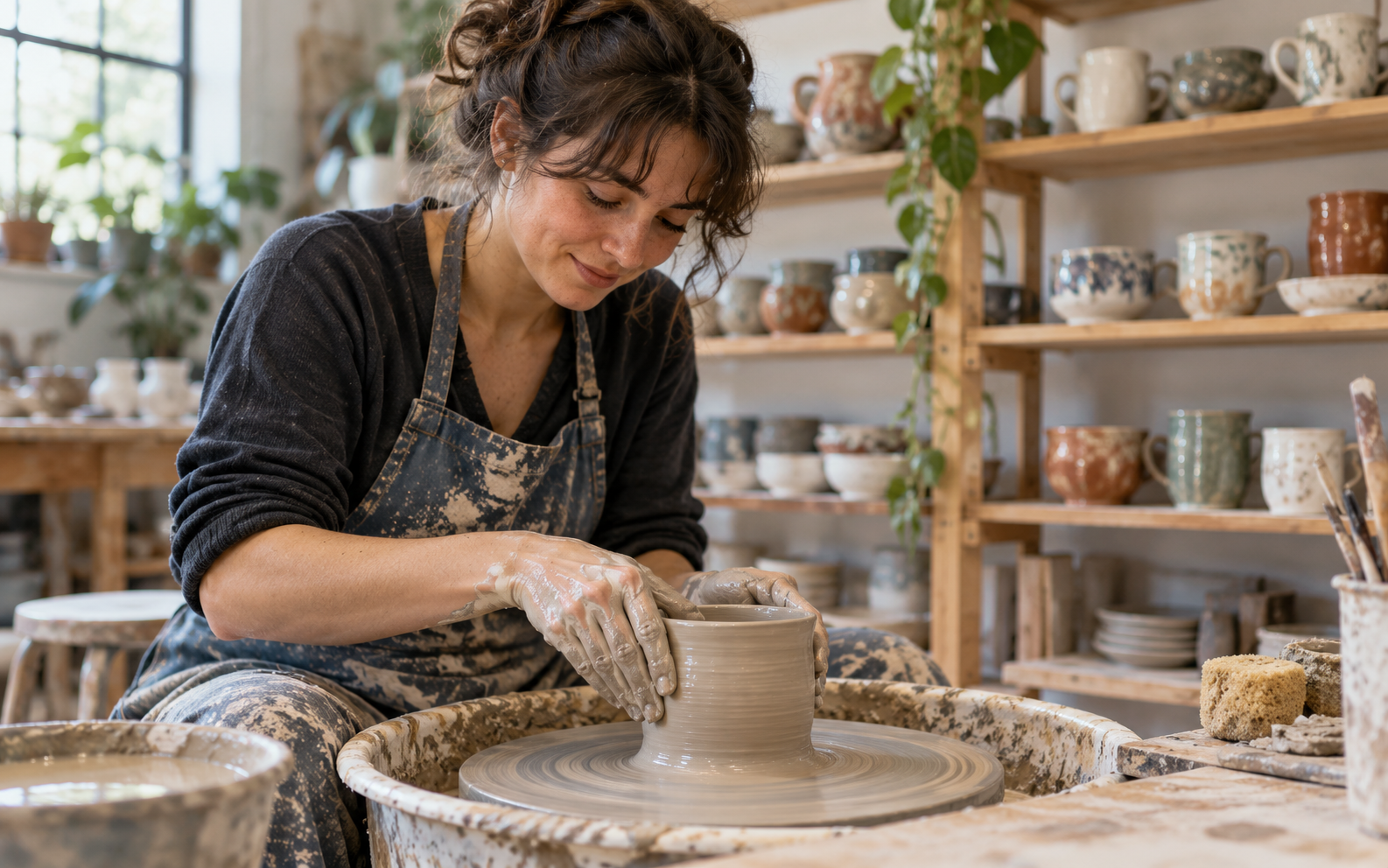
Pottery has the strongest physical appeal of all. Clay is heavy, messy and resistant to being rushed. It asks you to pay attention to pressure, balance and timing in a way a feed never does.
The object can be lopsided and still become your favourite mug. In fact, the slight wobble is often the point: nobody else has that exact version.
Journaling, scrapbooking and drawing
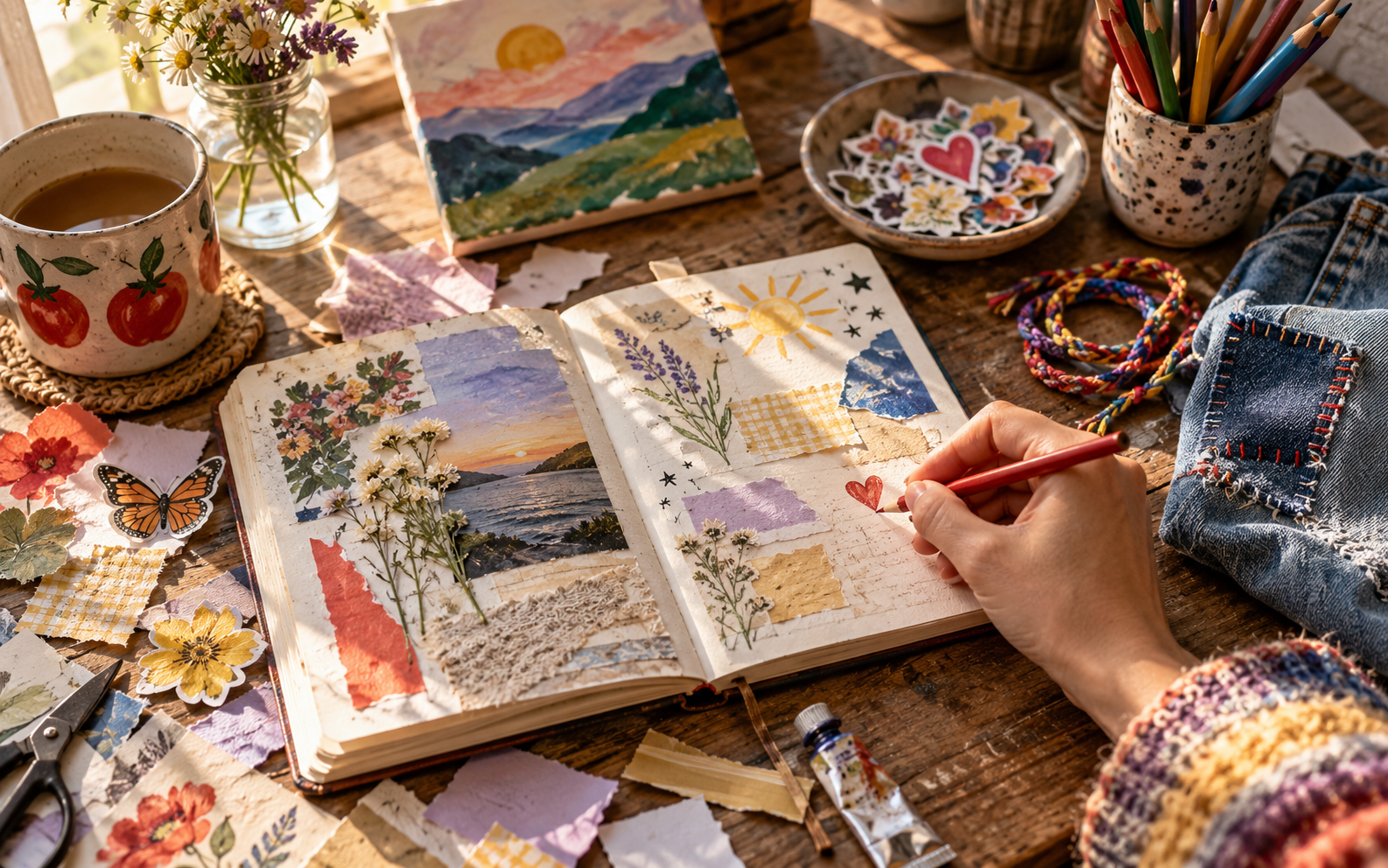
Paper hobbies are having their own quiet comeback. Journaling and scrapbooking turn private thoughts, ticket stubs, photos, stickers and scraps of packaging into a record that cannot be refreshed away.
Drawing and painting offer a similar kind of permission. You do not need to be “an artist” to fill a page. The page can be a place to practise, make a bad sketch, copy a colour combination or simply leave proof that you were paying attention.
Friendship bracelets and handmade accessories
Bracelets, charms, beads and small accessories have one advantage over a large craft project: they travel well.
They can be made on a bus, during a film, at a café or with friends around a table. They are also social objects. You can keep one, swap one, give one away or make a colour combination that only makes sense to your group chat.
TikTok and Instagram helped the offline hobbies spread
This revival is not happening outside the internet. It is moving through it.
Short videos make process visible. A stranger can watch a sleeve being embroidered, a bowl being glazed or a messy desk becoming a scrapbook and think, “I could try that.” Tutorials reduce the awkward first step. Time-lapse videos make repetition look calming. Craft creators turn solitary work into a shared room.
That is the funny contradiction: platforms built to keep people watching are also helping people find activities that make them close the app.
Pinterest’s 2026 hobbies report says 51% of Gen Z respondents associate having a hobby with joy. That is a platform trend report, not a scientific measurement of every young person, but it captures the direction clearly: hobbies are being framed less as a productivity project and more as part of a satisfying life.
Imperfect objects feel personal again
Online culture has spent years teaching people to recognise polish. Smooth skin, clean rooms, perfect handwriting, neutral interiors, clothes that look effortless after a lot of effort.
Handmade objects interrupt that visual language.
A wonky stitch shows where a person’s attention slowed down. A mug with an uneven rim has a story. A scrapbook page that is too crowded can feel more alive than a perfectly balanced layout.
This does not mean every imperfect thing is automatically meaningful. It means the evidence of the maker has become part of the appeal. The object is not just an image. It is a record of time.
Is this actually a digital detox?
Not necessarily.
Someone can crochet while watching a show, post pottery videos after class, buy fabric through an app and keep a craft tutorial open beside their sewing machine. The point is not purity. These hobbies are not a return to a pre-internet life.
They are a way of making the internet one part of the experience instead of the entire experience.
That distinction matters. Calling every offline hobby a digital detox makes it sound like a temporary cleanse. A better description is a change in texture: from reacting to producing, from infinite choice to one material in front of you, from content that disappears to an object that stays.
The making is the point
The craft revival may fade as a trend label. The need underneath it is harder to dismiss.
People want things to do with their hands. They want skills they can slowly improve. They want gifts that could not have been bought by an algorithm. They want to spend time with friends without every minute becoming a post.
The internet did not make that desire disappear. It made the contrast easier to feel.
So try the tiny version. One bracelet. One repaired pocket. One page. One badly shaped cup at a community studio.
You do not have to become a craft person.
You just have to make one thing long enough to remember what your attention feels like when it has somewhere to go.